
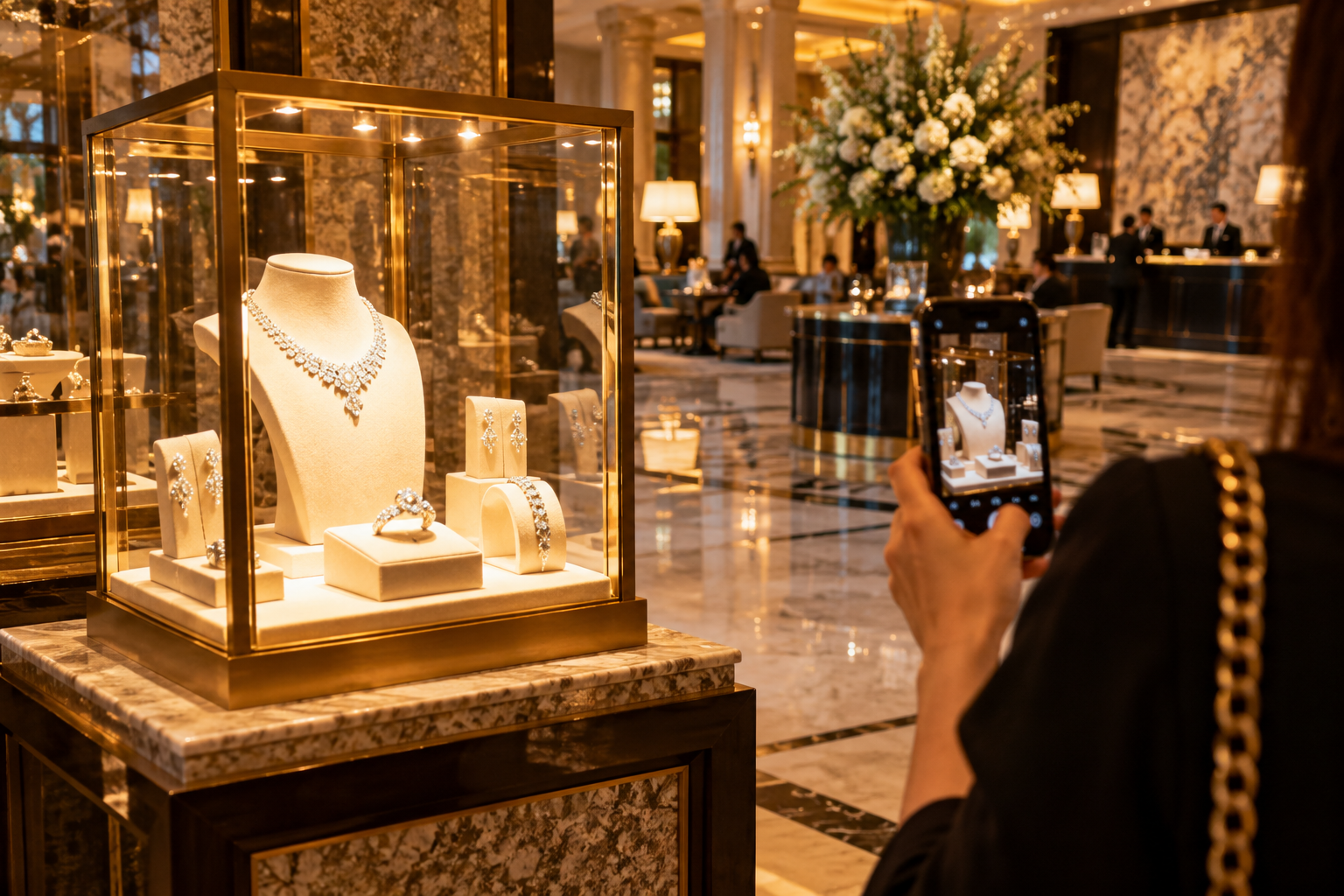
The jewellery shop that advertises to one hotel
There’s a jewellery boutique on the ground floor of one of Sydney’s big hotels. Gorgeous cases, harbour-priced stock, and for years the same problem every shop like it has: the people most likely to buy were asleep 20 floors above it, scrolling their phones, and the shop had no way to reach them.
Now it does. Every guest who connects from inside that building starts seeing the boutique’s ads. The anniversary couple planning a big night out. The executive who forgot her mother’s birthday. The honeymooners one lift ride away from a ring upgrade. By the time they walk through the lobby, they’ve already met the shop twice.
The guests change every 3 days. The ads don’t have to chase anyone across Sydney, because the right people keep arriving at the same address. Since switching the targeting from “Sydney, 25 to 65” to “this building”, the boutique’s business has grown steadily, month on month.
That’s hyper-targeted advertising: a fence drawn around a front door instead of a suburb.
How it works
Ordinary digital ads let you target a radius measured in kilometres. Hyper-targeting draws the line in metres, around a single building or venue, and serves your ads to the phones inside it.
The second difference is where the ads are bought. Instead of going through Google’s auction, the inventory is bought directly from the websites and apps where ads appear. Two things follow from that:
It’s cheaper. Google’s display network adds a hefty markup to every impression; buying direct cuts it out, which is how CPMs (the cost to show your ad 1,000 times) can start at a few dollars.
It gets priority. Publishers earn more from direct buys than from Google’s cut-taking auction, so directly bought placements tend to win the slot.
This kind of precision used to be the private playground of programmatic advertising, which was out of reach for small business because the platforms wanted $20,000 or more a month in spend before they’d take your call. That floor has collapsed. A Sydney SME can now run the same mechanics on a small-business budget of $1,500/month.
Who this is for
The pattern is always the same: your buyers gather somewhere specific, and general advertising wastes most of its money on everyone else.
- A shop inside or beside a hotel, mall or precinct, like our jeweller.
- A business whose customers sit in a competitor’s showroom deciding between you and them.
- Anyone whose buyers attend a conference or expo. Fence the convention centre for 3 days; be the brand they saw all week.
- Allied health near a hospital, recruiters near a university at graduation, caterers near business parks at Christmas.
And because the system remembers the phones it has seen, the ads can follow up after the person leaves the fence, which is where the sale usually lands.
What it costs
With our partner-delivered setup there’s no separate management margin stacked on the media, and performance is backed by a cost-per-impression guarantee. Campaigns are scoped per location: one building for one month is a small, testable experiment, not an annual contract.
If you want the full picture of where it fits among our services, the service page is here: Hyper-targeted Ads (30-metre radius).
The question to ask yourself
Where do your best customers stand still?
If an address came to mind, this is probably the cheapest qualified attention you can buy. Book a 20-minute fit call and bring that address. I’ll tell you what a one-building campaign would look like, what it would cost, and whether your answer is as good as the jeweller’s.
Camelia Vasile is the founder of Zoom Direct Media, the Sydney marketing agency for small business.